
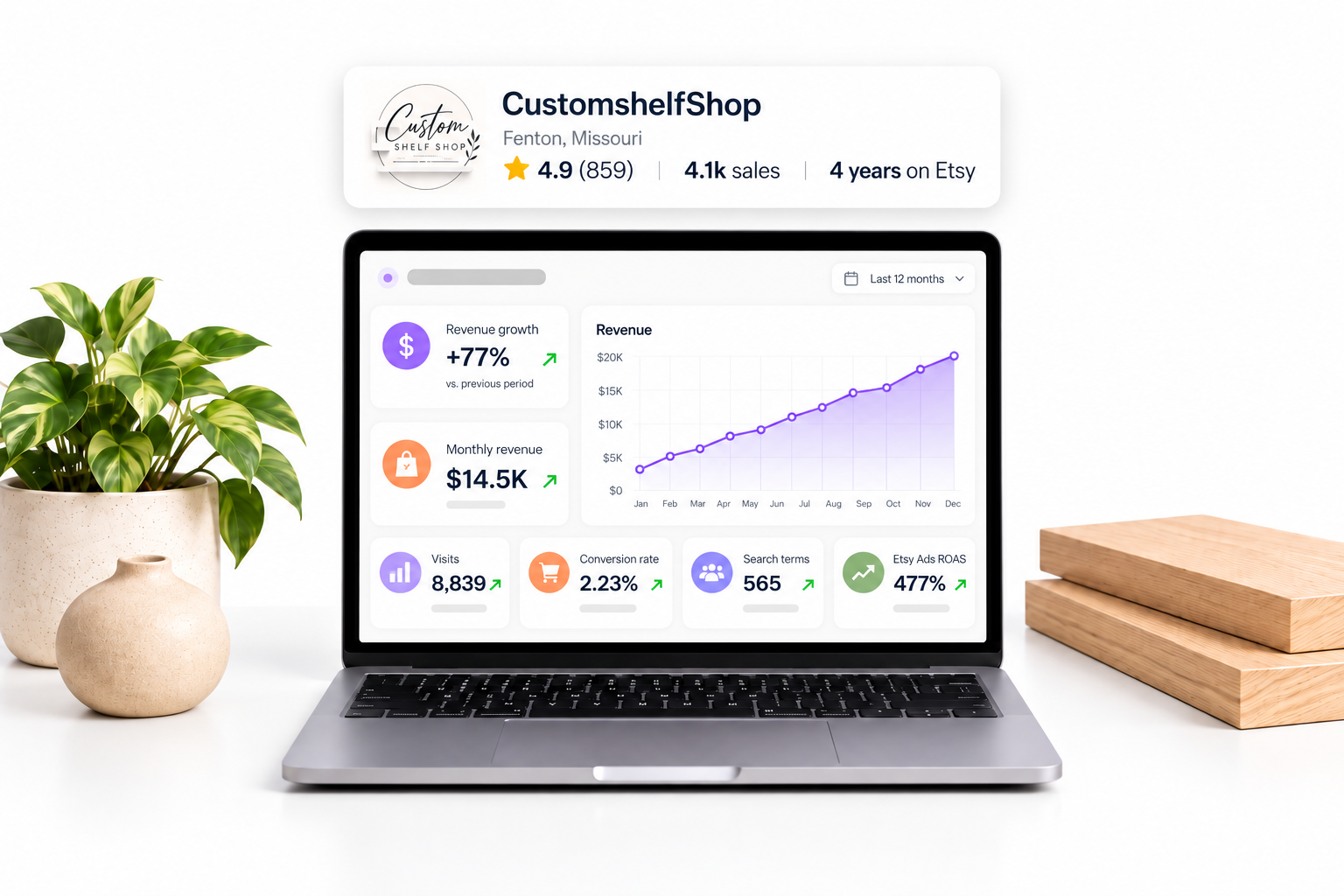
CustomShelfShop sells custom-cut shelf boards, storage solutions, and made-to-size shelving products on Etsy. In the first full month after starting the SEO program, the shop generated $8,195 in monthly revenue. By August, monthly Etsy revenue had reached approximately $14.5K, traffic climbed to a new high of 8,839 visits, and Etsy Ads ROAS reached 477%.
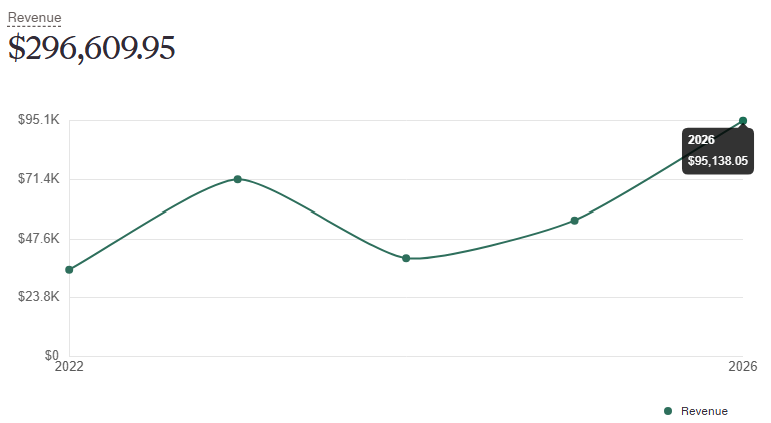
By September 25, 2026, the shop had already generated $95,138 in revenue for the year, surpassing its previous best full-year result before Q4 had even begun.
Here is how continuous Etsy SEO, catalog expansion, conversion optimization, and more disciplined Etsy Ads management helped build a much broader growth system around a store that had previously relied heavily on a small number of products.
Results after five months
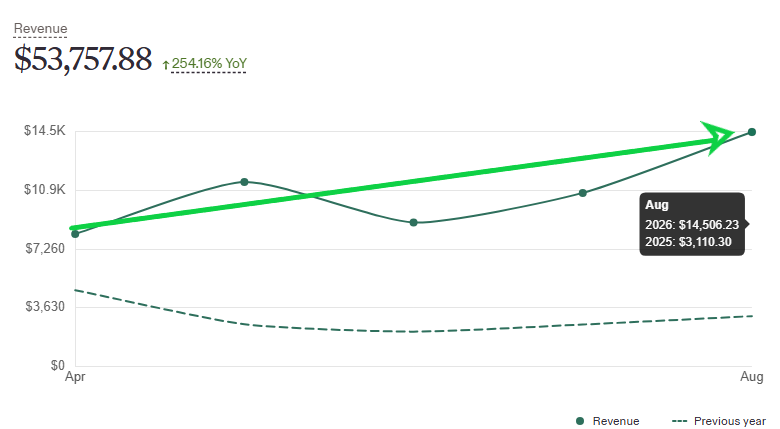
- Monthly revenue increased from $8.2K in April to approximately $14.5K in August - up 77%
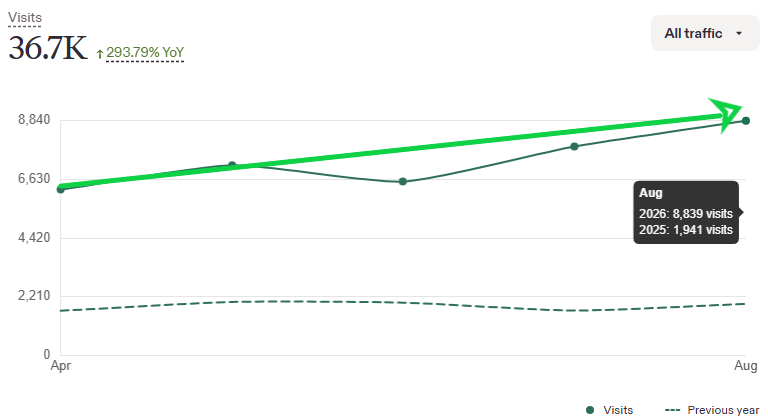
- Traffic reached 8,839 visits, a new shop high
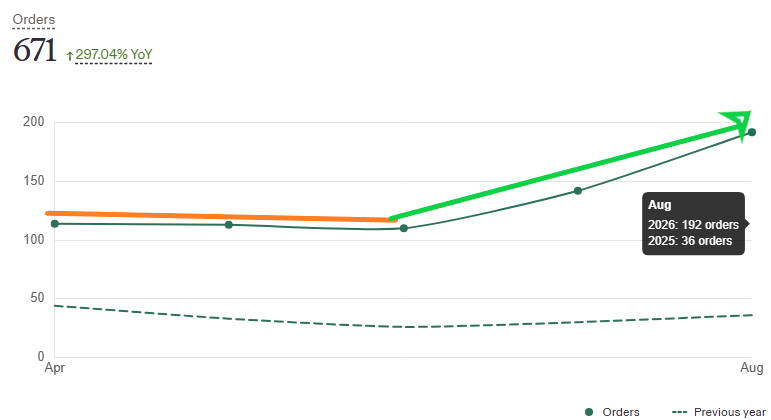
- August generated 197 orders at a 2.23% conversion rate
- Etsy search terms increased from 284 in April to 565 in August, almost doubling the shop’s search footprint
- Etsy Ads ROAS increased from 264% in April to 477% in August, while cost per Etsy Ads order fell from $25 to $15
Last update: 25 September 2026 - 6 months into the program
The growth continued beyond August. By September 25, CustomShelfShop had generated $95,138.02 in 2026 revenue, already higher than any previous full year.
The shop’s former strongest year was 2023, when revenue reached approximately $71.4K. This means 2026 had already surpassed the previous annual record by roughly 33% before Q4.
The shop
CustomShelfShop offers custom-cut shelving products for customers working on home repairs, remodeling projects, storage solutions, closets, cabinets, and other made-to-measure applications. The shop already had several important advantages when we started: strong customer reviews, a wide color selection, customizable sizing, and one particularly successful listing where displaying the available colors in the main thumbnail had driven a significant increase in sales.
The shop also had plenty of room to grow since they could keep up with increased demand. At the time, they were making around $9K per month on Etsy. What the shop did not yet have was enough search coverage around those products.
When we began working together in March 2026, there were only 17 active listings. Titles were generally short, tags were not fully used, and customers had found the store through only 256 unique search phrases.
The opportunity was therefore not simply to “change some keywords.” It was to create more ways for Etsy shoppers to discover the same strong product offering.
What we found in the store - initial analysis
Four findings shaped the strategy that followed.
1. The Etsy SEO footprint was too narrow
Many listing titles were short and gave Etsy very little information about the product, its use, the room it belonged in, or the type of buyer searching for it.
Tags were not being used to their full potential either. Some were broad or generic, while search phrases customers were already using - such as “cut to size wood” - were missing from titles.
The clearest indicator was search-term coverage. The shop had been discovered through only 256 different phrases. Before doing more advanced SEO work, we first needed to create a much richer base of relevant keywords.
2. Too much of the store depended on a small number of listings
The shop had proven that a great product could perform extremely well, but revenue was concentrated.
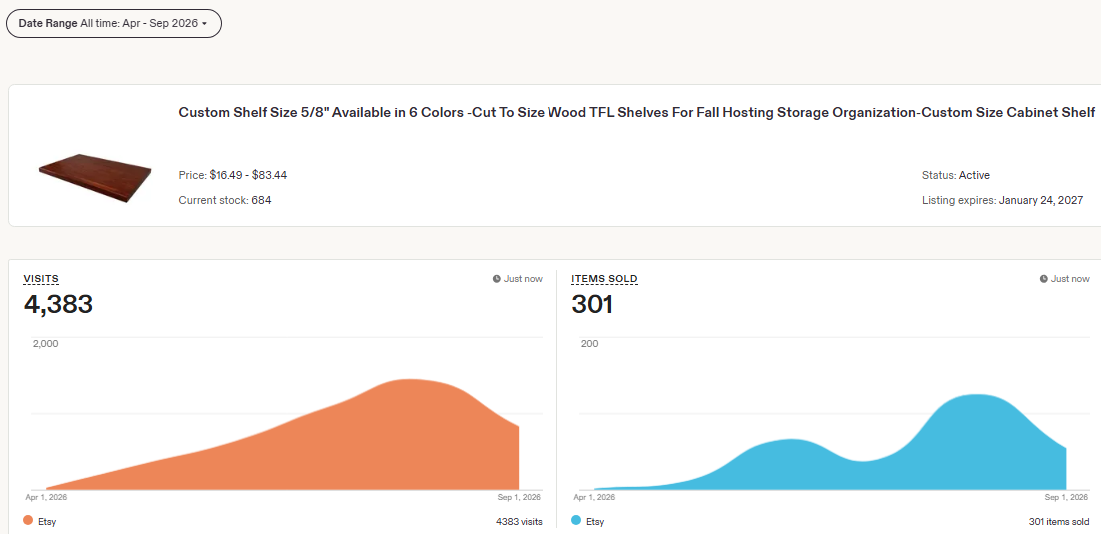
One older custom shelf listing had previously accounted for around half of store revenue and nearly half of overall traffic, before declining from its peak. A newer 5/8" custom shelf listing had then become the main bestseller and was responsible for the majority of revenue during several important periods.
That made the strategy clear: we did not want to unnecessarily disturb the bestseller. Instead, the first SEO tests would focus primarily on middle-performing listings and use the results to expand the rest of the catalog. The initial strategy therefore specifically excluded the bestseller from the optimization.
3. The catalog was too small for the number of search opportunities available
Seventeen listings gave the shop really small entry points into Etsy search.
The products themselves could be great fit for closets, kitchens, bathrooms, offices, wardrobes, nurseries, laundry rooms, storage projects, furniture projects, DIY searches and multiple other use cases. Yet those search intents were largely being asked to funnel through the same limited set of listings.
The answer was not to create random duplicates. It was to develop listings deliberately around different rooms, uses, products, customer intentions and keyword groups.
4. Product photography was limiting both growth and account safety
This became an important part of the project very early.
Several listings had previously been removed under Etsy’s Creativity Standards, while the shop was already in a sensitive account position. During our analysis, we learned that many listing images came from stock photography or screenshots found online. Reverse-image checks showed the same imagery appearing on other websites.
This created a second problem beyond SEO.
We wanted to expand the catalog aggressively, but doing that with recycled stock imagery would multiply the risk. New, authentic product and lifestyle photography therefore became part of the growth strategy rather than a separate creative task.
What we did
1. Real-time Etsy SEO, built around more ways to search for the product
The first phase was keyword enrichment.
Instead of relying mostly on broad phrases such as “custom shelf,” we expanded the language around the products according to room, use case, product type, customer intent and current Etsy demand.
The initial strategy combined keyword enrichment with Etsy landing-page optimization. Some of the keywords included Home Improvement, Furniture and Decor, Storage and Organization, Home Organization, Closet Shelf and Drawer Organizer.
From there, the keyword map evolved continuously.
As Etsy changed its featured landing pages and marketplace demand shifted, listings were updated with opportunities around Home Favorites, Storage & Organization, Personalized Home Decor, Kitchen & Dining, DIY, bathroom storage, pantry shelving, dorm décor, porch furnishings, homeware, personalized home gifts, fall décor and other relevant searches.
The important part was that SEO did not remain static after the initial optimization. New search behaviour was repeatedly fed back into the listings.
2. Search-centered catalog expansion
We then started turning one product into multiple, clearly differentiated search entry points.
Existing shelves were duplicated and repositioned around specific environments and applications such as offices, kitchens, bathrooms and wardrobes. New photographs made it possible to continue expanding into more use cases without relying on the stock imagery that had caused problems earlier.
The effect on catalog size was fast.
By the beginning of May, the shop had grown from 17 to 38 products. Importantly, some of those newly created listings began receiving orders almost immediately, giving us validation that the new search entry points were reaching relevant customers.
From there, catalog expansion became more selective. Instead of duplicating indefinitely, we used listing statistics, marketplace demand and customer behaviour to identify the next opportunities.
3. Original photography that supported both Etsy SEO and conversion
SEO could create impressions, but shoppers still needed a reason to click.
We therefore worked with the owners on replacing risky stock imagery with new product photography. The focus was on lifestyle images showing the shelves in real environments, cleaner product shots, stronger contrast around light-colored boards, and images that made color options easier to understand.
This gave us something much more useful than simply “better photos.”
The same shelf could now be shown naturally in a kitchen, wardrobe, bathroom or storage environment, allowing the visual to match the specific search intent targeted by each duplicated listing.
In other words, the thumbnail and the keyword started telling the same story.
4. Improving the buying experience around custom products
Custom shelving requires customers to provide dimensions, colors and other specifications correctly. Reducing friction here was just as important as generating more traffic.
When Etsy introduced additional personalization options, we tested the new functionality gradually. It was first added to one strong listing and monitored before being expanded further. Orders continued to come through and customers successfully completed the personalization fields.
We also worked on custom-service listings, cube-storage variations and more understandable ways of presenting custom orders. The storefront itself was reorganized around clearer sections and stronger products, while listing opportunities were increasingly developed from the actual questions, searches and use cases customers were showing us.
5. Etsy Ads and SEO started feeding each other
The shop was already advertising when we started, but some listings were consuming the budget without converting efficiently.
The strategy was to optimize listings first, advertise the strongest opportunities, remove poor performers and irrelevant search terms, and then use the Ads data as another source of SEO information.
In May, for example, high-click Etsy Ads listings were specifically selected for title and tag optimization based on their advertising search terms and impressions.
This created a useful loop: SEO expanded the queries a product could appear for, Ads produced additional search-behaviour data, and that data helped refine both organic positioning and paid targeting.
The results
Five months into the SEO Success Package, the shop was operating on a very different base.
The clearest change was search coverage. Etsy search terms increased from 284 in April to 565 in August - almost 100% growth.

More search coverage translated into more overall visibility. Total shop traffic rose from 6,247 visits in April to 8,839 in August, an increase of roughly 41% and a new high for the store.

Revenue followed. April - the first full month of the program - generated $8,195. By August, the Etsy revenue dashboard showed approximately $14,506, representing growth of about 77% in four months.

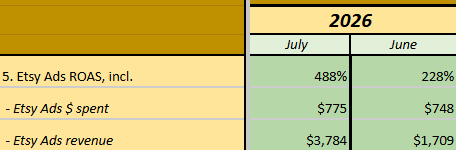
The shop also became much more efficient at turning paid visibility into revenue. Etsy Ads ROAS increased from 264% in April to 477% in August. Over the same period, cost per Etsy Ads order decreased from $25 to $15, while the number of ad clicks required to generate an order fell from 62 to 39.

This was not simply the result of spending more. In July, for example, Etsy Ads spend stayed almost unchanged from June while Etsy Ads revenue more than doubled; ROAS reached 433%, its highest level of the year at that point.
The broader catalog was also beginning to do what it was designed to do. Newly duplicated products started generating orders, custom-service listings converted after the buying process was improved, and search data continually revealed additional applications such as stereo shelves, board-game shelves, trophy shelves and even customers using the products as countertops.
The biggest change was therefore bigger than one revenue number.
CustomShelfShop started with a strong product, but a narrow Etsy footprint: 17 listings, limited keyword coverage, one dominant bestseller and several areas of unnecessary risk.
Five months later, the store had substantially more ways to be discovered, more listings positioned around specific buyer intentions, original imagery that supported those positions, a more efficient advertising system, and a much stronger foundation for Q4.
The result was a store that was easier to discover, easier to understand, and less dependent on a single route to growth.